

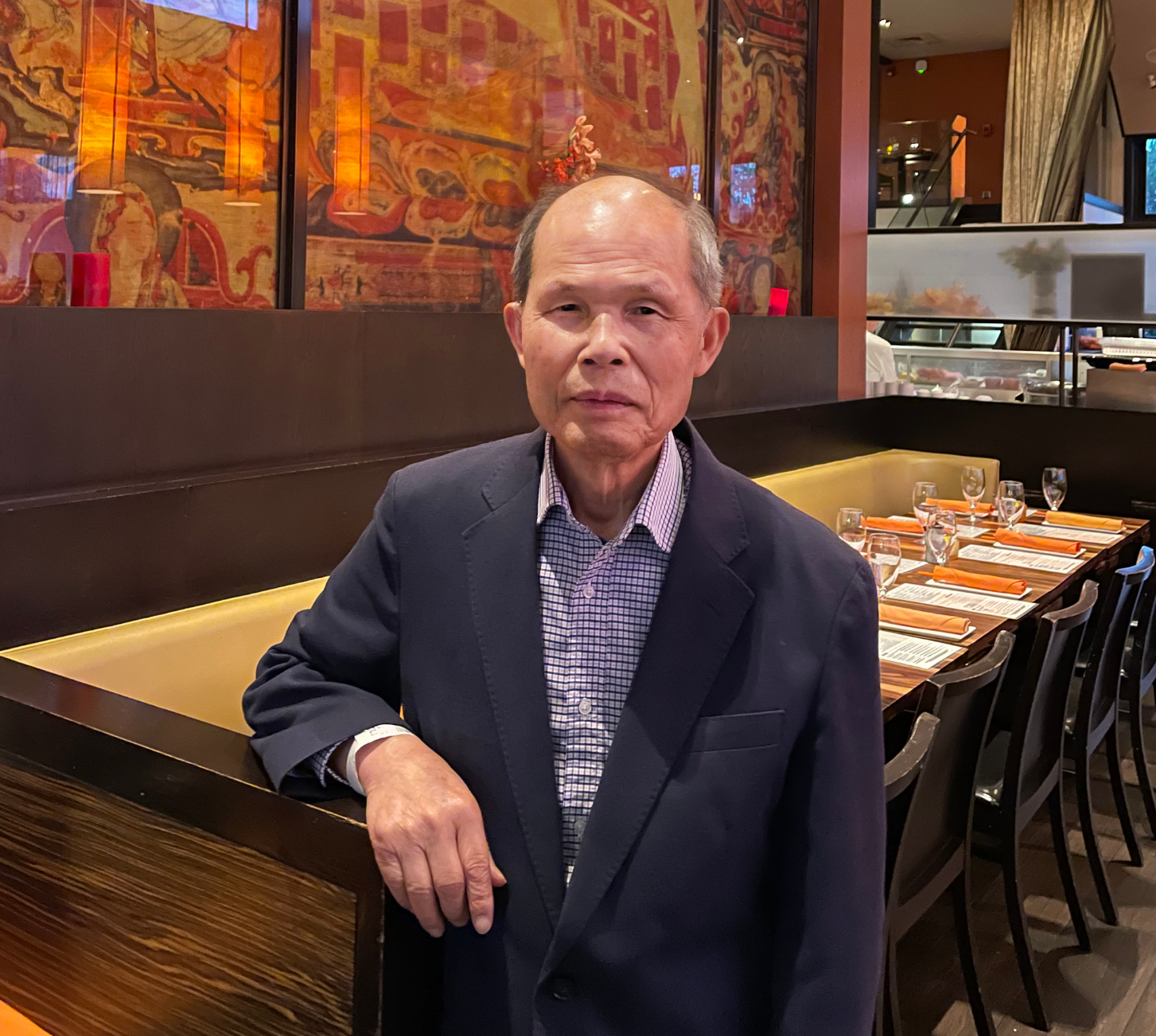
A Tribute to Wei Ming-Kuang: The Visionary Behind Taiwan's 'Pulitzer Prize'
Wei Ming-Kuang, a son of rural Taiwan, became a highly successful entrepreneur in the United States and is an esteemed alumnus of the National Chengchi University (NCCU) Department of Journalism, 29th graduating class.
In 2023, at the age of 81, Mr. Wei first donated $10 million USD back to his alma mater. The following year, he augmented this with an additional $5 million USD, bringing his total commitment to $15 million USD. This monumental donation established the Wei Fund for Educational and Journalistic Excellence. His greatest aspiration is to establish a journalistic award in Taiwan akin to the prestigious American Pulitzer Prize.
This donation is unprecedented in its explicit focus on cultivating, recruiting, and retaining top talent within the field of journalism. It powerfully reveals the immense "journalistic soul" dwelling within Wei, and underscores his profound expectations for those working in the press.
Early Life and The Call to Journalism
Wei was born in 1942 in Baoshan, Hsinchu. As a Hakka, his early life was one of poverty; his father was a policeman, and his mother led the six sons in farming. Due to their financial situation, Wei started school a year later than his peers. Nevertheless, he excelled academically. After graduating from junior high, he was admitted to the tuition-free Hsinchu Normal School (now the National Tsing Hua University’s College of Education) and taught for three years.
At 23, deeply concerned about the precarious state and slow progress of the nation, he concluded that the media was the only way to effectively and immediately enlighten the public and hold the government accountable. This conviction led him to commit himself to journalism.
He resigned from teaching to return to school. In 1965, Michael Wei entered the NCCU Department of Journalism as the top student of his class and first-choice applicant, graduating four years later as the top student in 1969.
Seeds of Philanthropy
He was a prominent figure on campus and was highly regarded by his teachers. Throughout his four years, he received over ten scholarships. He understood firsthand the immense support these "timely gifts" provided to young students, sowing the seed for his future belief in "repaying kindness with a gushing spring" – a virtuous cycle of giving.
Before graduation, he was encouraged and recommended by the influential media professional and writer, Yao Peng (pen name: Peng Ge), to pursue further studies at the University of Missouri School of Journalism in the U.S. After earning his degree, Yao Peng, then the Editor-in-Chief of the Central Daily News, invited him to return to Taiwan. However, Wei respectfully declined the offer, as he had already secured a job at an American law firm.
The Path to Entrepreneurship
Wei often felt like a "deserter" from journalism, believing he had failed his mentors and was "ashamed to face his elders." It wasn't until his 81st birthday, when he made the donation to his alma mater, that he finally felt able to visit Professor Yao Peng, seeking forgiveness for his perceived failing. At the time, Yao Peng was 97. Their reunion after more than fifty years was filled with inexpressible gratitude and apology.
Wei’s time at the law firm was brief; he soon transitioned into the restaurant industry. While working and dining at the famous "The Queen" Chinese restaurant in Washington D.C., he frequently saw high-profile figures like President Nixon and Henry Kissinger dining there. He quickly recognized the enormous commercial potential of the restaurant business.
In the late 1970s, he opened his first Chinese restaurant, “Ming’s Garden” in Philadelphia. This was followed by “Szechuan Garden” and “Tian Xiang Guan” in the 1980s, and “Yang Ming Xuan” and “Yang Chun Xiao Guan” in the 1990s. In 2004, he launched “Dan Lu Xuan”, which, in 2011, was rated the #1 Best Chinese Restaurant in America by U.S. media. In that same year, he was also recognized as one of the twelve most influential figures in the American Chinese restaurant industry.
It was also in 2011 that he was elected as a supervisor for the Taiwan Media Watch Foundation and began making donations. His business success enabled him to revisit his unfulfilled dream: to help Taiwan’s media industry reach a higher level of excellence.
Vision and Legacy
Across his six restaurants, Wei adopted the philosophy of "Chinese learning for substance, Western learning for application" (中學為體,西學為用). He based his work on Chinese cuisine while using Western plating styles, fusing the best elements of Japanese, Italian, Korean, Thai, and Mexican cuisines to create diverse sensory experiences. Openness, innovation, and a bold willingness to experiment became the hallmarks of the Wei-system restaurants.
The Chinese saying, "Governing a large state is like cooking a small fish" (治大國若烹小鮮), reflects Wei's cross-cultural, cross-border fusion philosophy in the restaurant business, which endowed him with an international mindset. Yet, his deep love for his nation, hometown, and younger generations led him to choose his old department at NCCU as the base for his great act of philanthropy.
The magnitude of his $15 million USD donation to the Wei Fund for Educational and Journalistic Excellence reflects the depth of his commitment. The fund is earmarked for three primary purposes: scholarships (university-wide), journalism lectures, and a journalism award. The budget for the journalism award, the Wei Ming-Kuang Prize, accounts for a massive 57.5%, significantly outweighing the other two categories combined, highlighting its paramount importance to him.
The Wei Ming-Kuang Prize is divided into the Initiative for Journalism Advancement and the Initiative for Global Exploration. Wei challenges the press to "look towards the world, and reflect on the local," using an international perspective to elevate the professional quality of the media’s "Fourth Estate" functions—supervising, safeguarding, and educating the public. The award aims to encourage journalists to provide foresight for the nation and its people, propose concrete solutions to problems, and experiment with new possibilities to make Taiwan better.
“Taiwan is my root, my eternal homeland. And journalism was my first calling,” he stated. The lifelong career he was unable to fully pursue due to circumstances is now an eternal mission he hopes those with a journalistic soul can carry forward, passing the torch from one generation to the next, making the field even stronger.
Wei hopes the Wei Ming-Kuang Prize will make Taiwan shine brighter.